Recent Cases
April 1, 2026 (Cook County): Not Guilty of Class X Aggravated Unlawful use of Weapon (“Switch” / “Machine Gun.”) The client was charged with multiple Class X felony counts of Aggravated Unlawful Use of a Weapon (AUUW), along with additional UUW offenses, The case arose from officers’ recovery of a handgun equipped with a “switch”—a device claimed to render the firearm capable of discharging multiple rounds automatically with a single function of the trigger–from a vehicle. At trial, the State relied heavily on video evidence depicting the client seated in the front passenger seat, sitting on top of the firearm, before exiting and fleeing the vehicle upon police command. Adam Sheppard questioned the officers regarding their observations. The defense also presented testimony from the client, providing context and directly addressing the issue of knowledge and control. Critically, the defense argued—and supported with controlling case law—that mere proximity to a firearm, even with knowledge of its presence, is legally insufficient to establish possession. The court was presented with authority emphasizing that the State must prove the defendant exercised immediate and exclusive control over the weapon. Defendant was acquitted of all counts.
March 5, 2026 (Skokie Courthouse, Cook County, Illinois): Landlord Acquitted of All Charges Following Trial on Allegations of Residential Burglary and Criminal Trespass. Tenants accused the firm’s client—a landlord of a Chicago-area apartment building—of Residential Burglary, a Class 1 non-probationable felony, after a Ring camera recording allegedly showed him entering an apartment unit. On the day of trial, however, the State dismissed the Residential Burglary charge and proceeded instead on an amended count of Criminal Trespass to a Residence. Following trial—during which Adam Sheppard cross-examined both the complaining witness and the investigating detective—the Court returned a verdict of Not Guilty. The result fully cleared the defendant of all charges.
February 19, 2026 (Kane County, Illinois): Physician Charged with Aggravated Criminal Sexual Assault and Related Offenses Granted Pretrial Release After Court Overturns Initial Detention Order. The trial court judge overturned a prior detention order entered in initial appearance court by a different judge and granted pretrial release to a physician charged with Aggravated Criminal Sexual Assault, Aggravated Criminal Sexual Abuse, Unlawful Restraint, and Sexual Exploitation of a Child. The defendant had initially been detained in initial appearance court. After reviewing discovery, securing a suitable residence where the defendant could reside on pretrial release, and assembling additional mitigation materials, Sheppard Law Firm filed a motion seeking the defendant’s release pursuant to the SAFE-T Act (Pretrial Fairness Act)—a subject on which Attorney Adam Sheppard has lectured at legal seminars. Following a hearing on the motion, the trial court vacated the prior detention order and ordered the defendant released on pretrial conditions, allowing the defendant to prepared for trial while on pretrial release.
October 28, 2025 (Bridgeview Courthouse, Cook County, Illinois): Not Guilty of All Charges, Including Class X Aggravated Domestic Battery
Following a bench trial, the defendant was found Not Guilty of all charges, including the Class X felony of Aggravated Domestic Battery. The case arose from allegations made by a minor accusing her mother of aggravated domestic battery. Because the charge alleged that the defendant caused “great bodily harm,” it was classified as a Class X felony, exposing the defendant to 6–30 years’ imprisonment with no possibility of probation. After the defense conducted cross-examination of the minor complainant and her father—who testified as the alleged “outcry” witness—introduced relevant medical records, and presented closing argument, the court entered findings of not guilty on all counts. A significant component of the defense involved impeaching the complainant’s testimony through prior statements made during a hearing under 725 ILCS 5/115-10. At that hearing, the defense had locked both the complainant and her father into specific accounts of the events. At trial, the complainant’s testimony proved inconsistent with those earlier statements, which the defense used effectively in cross-examination to undermine the reliability of the allegations.
December 6, 2024: Sheppard Law Firm obtains Reversal of Homicide Conviction in Appellate Court. The Illinois Appellate Court reversed Dr. Wyndham Lathem’s murder conviction based on Adam Sheppard’s briefs in the appellate court. The case has garnered international media coverage. Sheppard Law Firm also represented Dr. Lathem at trial and is preparing for a retrial. See segment below:

September 3, 2024: Sexual Misconduct Disciplinary Hearing at University of Illinois, Chicago: Probation, Without Entry on a Transcript, for Student Athlete Accused of Sexual Misconduct. First, the University agreed not to pursue the matter under the University’s Title IX policy. A hearing was then held and the student was issued probation, which does not enter on a transcript. The student did not suffer a suspension or expulsion.
August 15, 2024: Lake County, Circuit Court of the 19th Judicial Circuit: Defendant Released over State’s Petition for Pretrial Dentition in domestic battery and felony unlawful restraint case where defendant was on probation at the time of the charged offense. The State had filed a petition for detention under the SAFE-T Act where the defendant was charged with domestic battery and unlawful restraint of his wife, resulting in injuries to her, at a time when the defendant was on probation for another offense. Following an extensive hearing where Attorney Adam Sheppard called the complaining witness as a witness at the detention hearing, the Court ordered the defendant released. Adam Sheppard has lectured on the Safe-T Act to bar associations and the press has consulted him regarding these hearings.
June 17, 2024: 2600 S. California, Circuit Court of Cook County: Judge Grants Motion to Vacate Plenary Order of Protection Over State’s Objection Thereby Allowing the Defendant, a Chicago Police Officer, to regain “paid” status with the CPD. In the case-in-chief, Sheppard Law Firm had obtained a disposition, on behalf of a Chicago Police Officer, whereby the charges of criminal sexual assault were dismissed in favor of misdemeanor battery (a (non-sex-offense) for which the defendant received probation. Moreover, following the disposition of the case, Sheppard Law Firm filed a motion to modify the terms of probation to remove a firearms restriction (which was granted) and a motion to vacate the plenary civil no contact order which was granted over the State’s objection. Accordingly, the defendant can regain “paid” status with CPD.
June 3, 2024: U.S. District Court, Northern District of Illinois: Sheppard Law Firm represents, at jury trial, a tax preparer who had been charged with wire-fraud based on an allegation that he submitted fraudulent Payroll Protection Program (PPP) and Economic Injury Disaster Loan (EIDL) applications on behalf of customers. The government had alleged a multi-million-dollar loss amount and the trial involved cross-examination of representatives from the Small Business Association, an FBI agent, an employee of the defendant’s, and customers who testified for the government.
May 10, 2024: U.S. District court, Northern District of Illinois: Sheppard Law Firm represents defendant in international extradition proceeding with the Hellenic Republic of Greece. The Hellenic Republic of Greece had filed an extradition request for a businessman who had been convicted of fraud in Greece. Sheppard Law Firm represented the client in extradition proceedings in the Northern District of Illinois. This case involved analysis of treaties with Greece and correspondence from the Ministry of Justice in Greece.
May 7, 2024: Seventh Circuit Court of Appeals: Adam Sheppard argues before the Seventh Circuit Court of Appeals on issues of first impression in a “Transportation” of Child Pornography Case (18 U.S.C. 2252(A)(a)(1)): Whether the Government was Required to Prove that “Another Individual” Downloaded the Images from the Defendant (who was using a peer-to-peer network) and whether the Government’s Unmanned Computer, using Software Unavailable to the Public, constituted “Another Individual” under the Law. Sheppard Law Firm also represented the defendant at jury trial in U.S. District Court and argued to the jury, and the federal court of appeals, that the government’s unmanned computer was more analagous to a “bot” than “another individual.” Adam Sheppard’s oral argument to the Seventh Circuit is available on this link: ORAL ARGUMENT.mp3
February 7, 2024: United States District Court, Northern District of Illinois: Defendant Receives Probation At Sentencing; Faced a Guideline Range of 21-27 months in Art Fraud Case with an Alleged Loss of Over 1 million dollars. Below, is the article describing the charges in the case. Sheppard Law Firm’s client is Ms. Rothschild, who based on mitigation material, received probation in the face of guidelines which called for 21-27 months’ imprisonment. ‘This guy is Saint Michael and is over 600 years old’: Sculptures, paintings, poster nabbed in art heist – Chicago Sun-Times (suntimes.com)
February 1, 2024: Dismissal of All Charges Against Chicago Police Officer/Former Coach Charged With Criminal Sexual Assault (Circuit Court of Cook County, 26th and California). See news article of initial charges, Chicago cop charged with sexually assaulting teen, woman years before getting hired – Chicago Sun-Times (suntimes.com). Sheppard Law Firm’s client, a well-regarded Chicago Police Officer, had been charged with multiple counts of criminal sexual assault, a non-probationable offense, carrying 4-15 years’ imprisonment on each count, and multiple counts of criminal sexual abuse. After Sheppard Law Firm was successful in defeating the State’s proof-of-other-crimes motion, and following extensive negotiations, charges were dismissed, and the case was resolved on an amended charge of a misdemeanor (non-sex offense) for which the defendant received probation without any jail time or any community service. The defendant is expected to be able to keep his position as a Chicago Police Officer.
December 18, 2023: Dismissal of All Charges Following Preliminary Hearing on Aggravated Unlawful Use of Weapon and Aggravated Assault (Branch 38, Circuit Court of Cook County): The defendant, a federal agent, was charged with brandishing a firearm while driving as part of a confrontation with another motorist. Officers searched the vehicle and allegedly recovered a loaded firearm. Adam Sheppard cross-examined the officer at preliminary hearing, adducing the fact that there were two other occupants in the vehicle, and other matters, which cast doubt on to whom the firearm belonged. The judge entered a finding of no probable cause, and all charges were dismissed at the preliminary hearing level.
December 12, 2023: Criminal Sexual Assault Prosecution: Not Guilty Following Bench Trial (Circuit Court of Cook County, 26th and California): Sheppard Law Firm’s client was charged the class 1, non-probationable, offense of criminal sexual assault, based on an allegation that he digitally penetrated a woman as she passed by him at the Radius nightclub. Sheppard Law Firm subpoenaed video surveillance from the club and then had an expert enhance the surveillance tape to show that the penetration which the complainant alleged was not possible. The complainant and her boyfriend (who later attacked the defendant based on the alleged incident) testified for the State. Sheppard Law Firm cross-examined the witnesses. Sheppard Law Firm introduced a photograph and another exhibit in its case-in-chief. In closing argument, Adam Sheppard walked the judge through the incident frame-by-frame through a PowerPoint presentation. The Judge found reasonable doubt and the defendant was acquitted.
September 15, 2023: Murder Prosecution: Dismissal of All charges at Bond Hearing (Circuit Court of Cook County, 26th and California): Sheppard Law Firm’s client was charged with murder based on stabbing another individual. Sheppard Law Firm’s position was that the defendant was acting in self-defense as the decedent came into the defendant’s home and battered the defendant. Following a review of the matter, the State dismissed all charges at the bond hearing.
August 11, 2023: (Circuit Court of Cook County, Rolling Meadows): Post-Conviction Petition Granted: defendant’s sentence 24-year sentence reduced to 8 years at 50% resulting in a sentence of 4 years time considered served and defendant’s immediate release in drug distribution case.
August 8, 2023 (Circuit Court of Cook County, 2600 S. California Avenue): Sheppard Law Firm’s client is granted NON-sex-offender probation in Child Pornography case. Sex offender probation is much more rigorous than standard probation and includes requirements such as a curfew (which may monitored by electronic home monitoring equipment), sex offender treatment, polygraph examinations, internet monitoring software and other requirements that are not included in standard probation cases. Sheppard Law Firm, through a sentencing hearing, was able to obtain non sex-offender probation for a client charged with 20-counts of child pornography. The terms of the probation for the defendant in this case also allowed him to treat with his current counselor as opposed to the sex offender treatment provider that the Probation Unit would assign. The firm has accomplished this disposition (non sex-offender probation) on prior cases as well.
July 18, 2023 (United States District Court, Northern District of Illinois): As the Chicago Sun Times headline reads: In conspiracy to commit prostitution, Travel Act and Mann Act offenses, “Federal judge gives probation sentence to woman who ran West Side fetish business.” Sheppard Law Firm’s client received probation after facing an advisory federal sentencing guideline range of 30-37 months and where the government had advocated for a 30-month sentence. Sheppard Law Firm also obtained a dismissal of all structuring charges, See Chicago Sun Times and Chicago Tribune articles below:
Chicago madam sentenced to home confinement in ‘unusual’ federal case.pdf—
June 1, 2023: Judge Rules in Favor of the Defendant in Denying the State’s Motion to Introduce Proof of Other Crimes in Criminal Sexual Assault Prosecution (Cook County, Illinois). The defendant was charged with criminal sexual assault of a high-school student. The State filed a motion to introduce an allegation by an adult woman that the defendant criminally sexually assaulted her. Sheppard Law Firm filed a response to the State’s motion. The Court denied the State’s motion and quoted Sheppard Law Firm’s response in the ruling.
May 9, 2023 (Marshall County, Illinois): Not Guilty of All Charges in Aggravated Criminal Sexual Abuse Prosecution: Sheppard Law Firm’s client was found Not Guilty of all charges following trial in Marshall County. He was charged with aggravated criminal sexual abuse of his son. The minor and his mother testified. Proof of other-crime-evidence was also introduced. The defendant testified on his own behalf. Cross-examination of the minor and his mother had led the judge to doubt the minor’s credibility and the defendant was found not guilty of all charges.
April 13, 2023 (Will County): Golf Course Manager Found Not Guilty of Battering Chief of Police of University Park. Sheppard’s client was found not guilty of all counts — Aggravated Battery to a Peace Officer and Resisting Arrest — following trial where she was accused of battering the chief of police of University Park. The news article below describes the case:
March 17, 2023 (Skokie courthouse): Sheppard Law Firm’s client, an attorney who is a prosecutor, had her non-probationable felony charge of Aggravated Unlawful Use of Weapon amended to a misdemeanor with permission from the court for the client to possess a firearm in accordance with the laws of any jurisdiction in which she resides. The charge had not only been a felony, but it was nonprobationable. Sheppard Law Firm had submitted an extensive mitigation packet to achieve this result.
March 3, 2023 (Northern District of Illinois, U.S. District Court): Significant Variance From Child Pornography Sentencing Guidelines in Child Pornography Case Involving “Website M.” Prior to the client being charged in this case, Sheppard Law Firm presented a Mitigation Packet to the United States Attorney’s Office and made a presentation to the U.S. Attorney’s Office which resulted in the defendant only being charged with possession — not receipt — of child pornography, which enabled the defendant to avoid the mandatory minimum sentence. At sentencing, based on Sheppard Law Firm’s Position Paper as to Sentencing Factors, the Court agreed that the sentencing enhancements for use-of-computer and sadistic or masochistic images unduly inflated the advisory guideline range in this case. The judge issued a sentence that varied well-below those guidelines. In doing so, the judge also placed significant weight on reports from psychiatrist and medical experts that Sheppard Law Firm engaged on the client’s behalf.
November 4, 2022 (Title IX, Northwestern University). Sheppard Law Firm’s appeal to Northwestern University within the Title IX process persuades the University to acknowledge a “procedural irregularity” in the proceeding. A student engaged Sheppard Law Firm to serve as his advisor on appeal after he was found responsible for a dating violence. Grounds for appeal in Title IX proceedings are generally limited to the following: 1) a procedural irregularity that affected the outcome of the matter; 2) new evidence that was not reasonably available at the time the initial determination was made; 3) the Title IX Coordinator, investigator(s), or decision-maker(s) had a conflict of interest or bias hat affected the outcome of the matter; or 4) the sanction was disproportionate with the violation. It is extremely rare for any university to acknowledge that any of the foregoing occurred. In this case, the University acknowledged a “procedural irregularity” which Sheppard Law Firm identified for its client on appeal.
November 3, 2022 (U.S. District Court, Northern District of Illinois): Sheppard Law Obtains a Result which the Federal Sentencing Commission has described as a “Rare Situation” — the defendant received a reduction in his sentence for acceptance of responsibility AFTER TRIAL. The defendant had proceeded to trial on charges of possession and transportation of child pornography. Generally, after a trial, a defendant does not receive “acceptance-of-responsibility” points; in other words, his sentence, under the guidelines, is higher after trial than if he had pled guilty. In this case, however, the Judge agreed with Sheppard Law Firm that the defendant should receive “acceptance-of-responsibility” points as his defense at trial was a legal defense where defendant did not disavow his underlying conduct. Accordingly, the Judge granted Sheppard Law Firm’s objection to the pre-sentence investigation report on this issue.
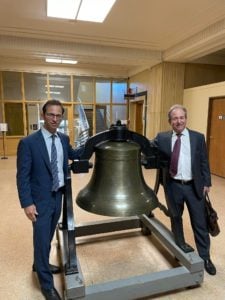
August 1, 2022: Freedom rang for Sheppard Law Firm’s client at the Bureau County courthouse (the lobby of which is pictured below): the defendant was charged with trafficking over a thousand pounds of cannabis. The charge carried a 12-year mandatory minimum sentence. Sheppard Law Firm filed a Motion to Quash Arrest and Suppress Evidence on grounds that the search and seizure in question was the result of an unduly prolonged detention on I-80. Based on the motion, the charges were amended and the defendant was granted probation.
June 2, 2022 (Circuit Court of Cook County): Massage Therapist Found Not-Guilty Following Bench Trial. The defendant was charged with battery based on an allegation that he grabbed the genitalia of a customer during a massage. The defendant was found not guilty solely based on Adam Sheppard’s cross-examination of the complainant (who himself was a lawyer). The defendant was not required to testify.
May 9, 2022: United States v. P (Northern District of Illinois): Judge orders pretrial release of defendant after multi-day detention hearing where there was a rebuttable presumption of detention based on the charges carrying a 10 year mandatory-minimum sentence. The judge ruled that the conditions of bond, which Sheppard Law Firm established, including substance abuse treatment for the defendant, were sufficient to secure the defendant’s presence in court and protect the community.
May 3, 2022: Lake County, Illinois: Motion to Dismiss in Domestic Battery Case Results in Dismissal of the Charges. At a hearing on the State’s motion to admit proof of other crimes in a domestic battery case, Adam Sheppard impeached the complainant to the point where the Court interjected, during the hearing, inviting the defense to file a motion to dismiss based on discrepancies between the complainant’s testimony and the charging instrument. Adam Sheppard did so and, on the date of the hearing on the defense motion to dismiss, the State dismissed the charges.
February 4, 2022: People v. SA: Circuit Court of Cook County. Sheppard Law Firm wins section 115-10 hearing, barring a child complainant’s outcry statements from evidence. The winning of the section 115-10 hearing led the State to amend predatory criminal sexual assault charges to misdemeanor battery for which the defendant received a sentence of one year supervision with no registration or sex offender treatment conditions.
January 5, 2022: Not Guilty on All 20 Counts in Sales Tax Fraud alleging nearly 1 million in underreported in liquor store sales taxes. Following a multi-day bench trial in the Circuit Court of Cook County, Sheppard Law Firm’s client was found not guilty of all 20 counts in the indictment. The following articles from the Chicago Sun Times and press release from the Attorney General’s Office explain the charges:
5 liquor store owners charged in tax fraud sweep – Chicago Sun-Times (suntimes.com)
December 14, 2021: University of Chicago Title IX Hearing — Sheppard’s Client held Not Responsible on all counts of Sexual Assault. The complainant had alleged that the respondent forced her to engage in non-consensual oral sex. The hearing involved Adam Sheppard’s cross-examination of the complainant and her witnesses as well as the testimony of the respondent and his witnesses. The hearing spanned two days. The deliberation spanned two days resulting in a finding of Not Responsible on all counts.
August 23, 2021: Circuit Court of Cook County (26th and California): Dismissal of All Charges against Physician who was Charged with Aggravated Criminal Sexual Assault and Aggravated Domestic Battery. After conducting a thorough investigation, which included communication with the complaining witness, and submitting of an extensive mitigation packet to the State’s Attorney’s Office, all charges — Aggravated Criminal Sexual Assault and Aggravated Domestic Battery — were dismissed against Sheppard’s client, a physician.
August 12, 2021: Circuit Court of Cook County (Maywood): Not Guilty of All Counts — Violation of Order of Protection — at Bench Trial. Sheppard Law Firm, P.C. obtained an acquittal in this case based on the law regarding insufficient service of a short form order of protection. The case was won on a “Directed Verdict,” meaning that the defendant was not called upon to testify or otherwise present his own evidence.
August 3, 2021: Title IX: University of Chicago — On the eve of the trial where the allegations were criminal sexual abuse, Sheppard Law Firm was able to persuade the complainant, through her advisor, to engage in the informal resolution process, instead of proceeding with the formal Title IX hearing, thereby ensuring that respondent would have no disciplinary record
June 23, 2021: U.S. District Court, N.D. Illinois: U.S. v. WX: Probation granted following extensive briefing and sentencing hearing for the defendant who faced a sentencing guideline range of 30-37 months. The charges involved the owner of a chemical compound company which was accused of selling controlled substances over the Internet. See the DOJ Press Release on the case: Two Suburban Chicago Residents Charged with Illegally Selling Narcotics Over the Internet; Law Enforcement Seizes Websites | USAO-NDIL | Department of Justice
July 19, 2021: Circuit Court of Cook County (26th & California): Single Largest Fraud Case to receive a Deferred Prosecution (which will lead to a dismissal of all charges). Sheppard Law Firm’s client was charged with embezzling $140,000 from his employer. Post-indictment, Sheppard Law Firm obtained the client’s transfer into the deferred prosecution program which will lead to a dismissal of all charges. The Deferred Prosecution Program reports that this is the single largest fraud ever to receive a deferred prosecution.
June 9, 2021: Skokie Courthouse, Circuit Court of Cook County – Not Guilty Based on Self-Defense: Sheppard’s client, a political refugee, charged in a Stabbing Case was found Not Guilty of all Charges — Judge Finds that he was Acting in Self-Defense.
April 9, 2021: Title IX – Washington University, St. Louis — Sheppard’s client found Not Liable of Non-Consensual Sexual Conduct, following an a three-day evidentiary hearing where, based on the recently amended Title IX rules, Adam Sheppard was permitted to cross-examine the complainant
October 21, 2020: United States v. XXXX (W.D. Pennsylvania). Probation for Sheppard’s client in a substantial conspiracy to distribute methamphetamine case in the Western District of Pennsylvania, U.S. District Court. Following an extensive sentencing hearing, the Court granted probation (with no jail time) to Sheppard’s client who was facing an advisory federal sentencing guideline range of 57-71 months imprisonment. At sentencing, the Court granted the defense motion for a formal departure based in part on defendant’s self-enrolled treatment in substance abuse treatment and a health condition. The Court departed from an offense level 25 to offense level of 11 and then varied from that guideline range to probation. Sheppard had argued for probation citing several factors including unwarranted sentencing disparities among similarly situated defendants. Two witnesses testified for the defendant at the sentencing hearing. At the sentencing hearing, the Court complimented Sheppard’s “comprehensive” sentencing memorandum.
June 30, 2020: Compassionate Release Motion Granted in U.S. District Court, Northern District of Illinois — Prisoner Ordered Released Nearly Two Years Early Based on the Risk of COVID-19 complications. Sheppard Law Firm obtained compassionate release through a motion which argued that the client’s underlying medical conditions and the risk of COVID-19 in the Bureau of Prisons created an extradordinary and compelling reason for release. The Court granted the motion. The Westlaw link to the Opinion & Order follows:Compassionate Release Opinion & Order – Westlaw
March 27, 2020: U.S. District Court, Northern District of Illinois. Court grants Sheppard Law Firm’s motion to extend a surrender date in light of COVID-19. Sheppard Law Firm is representing the defendant on appeal and this motion was brought while the appeal is pending. The case involves an allegation of bribery of a political official and alleged fraud. Sheppard Law Firm is also bringing motions for release on behalf of others based on COVID-19.
March 11, 2020: U.S. District Court, Northern District of Illinois: Sheppard’s client receives 85% departure from Federal Sentencing Guidelines in Child Pornography Case, resulting in highly unusual sentence in a child pornography case.
Facing a Guideline Range of 78-97 months on a child pornography case involving several enhancements, the judge departed to a sentence of twelve months and a day, meaning that the defendant will likely serve about 4 months in a facility (with a recommendation of a federal prison camp). To obtain such a departure based solely on the sentencing memorandum and oral advocacy (i.e., no substantial assistance motions or anything of the like) in a case where the defendant was otherwise ordinary is highly unusual. The thrust of Sheppard Law Firm’s arguments concerned outdated sentencing enhancements in the digital age and unwarranted disparities with similarly situated defendants in state court.
March 5, 2020: All charges dismissed against woman in unusual violation of order of protection case involving the transmission of HIV. Skokie courthouse, Cook County Illinois.
Sheppard’s client had been charged with violating an order of protection that a man had obtained against her. The man who had obtained the order of protection was the same man who had infected her with HIV. The woman was accused of violating the order by approaching the man and screaming to others in his presence that he had infected her with HIV. On the day of trial, Sheppard Law Firm had argued that the defendant’s alleged conduct did not violate the specific section of the restraining order that she was accused of violating. The State ultimately agreed and the charges were dismissed.
February 25, 2020: CIRCUIT COURT OF COOK COUNTY: ATTEMPT MURDER REDUCED TO MISDEMEANOR BASED ON SHEPPARD LAW FIRM’S OBTAINING OF VIDEO FOOTAGE, INVESTIGATION OF COMPLAINING WITNESSES, AND PRESENTATION OF MITIGATION MATERIAL
In a stabbing case outside of a bar which received media attention, Sheppard Law Firm’s had her charges reduced from Attempt Murder to misdemeanor battery. The Attempt Murder charges were based on the allegation that the defendant stabbed two separate women, resulting in a punctured lung to one and a permanent injury to the other’s hand. Sheppard Law Firm obtained video footage which cast doubt on the complainants’ versions of events and obtained further incriminating information about the complainants. Additionally, Sheppard Law Firm presented mitigation material to the prosecution. The result was dismissal of all felony charges.
FEBRUARY, 2020: TITLE IX HEARING – DEPAUL UNIVERSITY: STUDENT FOUND NOT GUILTY OF SEXUAL VIOLENCE/NON-CONSENSUAL SEX
Following an extensive, multi-witness, hearing at DePaul University, Sheppard’s client was acquitted of “Sexual Violence/Non-Consensual Sex.” The complainant had alleged that the respondent had coerced her into engaging in sex and that the sex was non-consensual. Prior to the hearing, a large volume of electronic communications were compiled and submitted to the University which cast doubt on the veracity of the complainant’s allegations. Additionally, at the hearing, the allegations were called into doubt based on the questions posed to the complainant and her witnesses.
JANUARY 28, 2020: U.S. DISTRICT COURT, NORTHERN DISTRICT OF ILLINOIS: SENTENCE OF TIME CONSIDERED SERVED (11 MONTHS) IN INTERNATIONAL ART FRAUD CASE ALLEGING MULTI-MILLION DOLLAR LOSS WHERE THE GUIDELINES CALLED FOR A 41-51 MONTH SENTENCE. The case is described in the CNN article below. (Sheppard’s client is a well-respected artist): CNN Article on International Art Fraud Case
DECEMBER 18, 2019, U.S. DISTRICT COURT, NORTHERN DISTRICT OF ILLINOIS: JUDGE OVERTURNS TWO NO-BOND (DETENTION) ORDERS AND GRANTS DEFENDANT’S PRETRIAL RELEASE IN ALLEGED $80 MILLION MEDICARE FRAUD CASE. The case involves multiple states and the defendant had been ordered detained in two other districts prior to being transported to the Northern District of Illinois. Sheppard Law Firm filed a Motion for Pretrial Release in the Northern District of Illinois. The government opposed the motion. A hearing was held and the Judge granted Sheppard Law Firm’s motion for pretrial relase and the defendant has been released.
DECEMBER 13, 2019: SHEPPARD LAW FIRM, P.C. WINS APPEAL IN THE FIRST DISTRICT ILLINOIS APPELLATE COURT AND OBTAINS DEFENDANT’S RELEASE ON BAIL WHERE THE DEFENDANT, A TEACHER, WAS CHARGED WITH CRIMINAL SEXUAL ASSAULT, CHILD PORNOGRAPHY, AND OTHER RELATED OFFENSES. FOLLOWING THE SUCESSFUL APPEAL, THE DEFENDANT WAS RELEASED ON BAIL ON DECEMBER 17, 2019.
The defendant, a teacher in Chicago Public Schools, had been charged with several serious offenses, including allegations of criminal sexual assault and child pornography involving a student. Four judges had denied bond to the defendant in four separate bond hearings. Sheppard Law Firm, P.C. appealed the no-bond orders to the Appellate Court arguing that the defendant was statutorily entitled to a bond as the State had not filed the requisite petition to hold him without bond and the hearings had not been conducted in compliance with the bail statute. The Appellate Court agreed. The Appellate Court issued a precedential opinion holding that defendant’s interpretation of the bond statute was correct — section 110-6.1 of the bond statute must be complied with before bond can be denied to a defendant who is charged with a non-probationable offense. The Appellate Court directed the Circuit Court to set a bond and the Circuit Court did set a bond and the defenant has been released. As the Appellate Court stated in another opinion, appeals of bail decisions are “exceedingly rare;” an appellate victory on a bail issue is even rarer. Attached, is an article from the Chicago Daily Law Bulletin summarizing the appellate decision. Chicago Daily Law Bulletin Article on Appellate Victory
SEPTEMBER 11, 2019: NOT GUILTY OF CRIMINAL SEXUAL ASSAULT
In a criminal sexual assault case which received media attention, Sheppards’ client was found not guilty of all charges. The case involved a so-called “threesome” wherein Sheppards’ client, a female, was charged, along with her then-boyfriend, with criminal sexual assault, a non-probationable offense. The allegation was that Sheppards’ client and her boyfriend had sex with the alleged victim while she was too drunk to consent and that they also used force or the threat of force to accomplish the sex acts. Following trial, the defendant was found not guilty of all charges.
AUGUST 1, 2019: NOT GUILTY OF RECKLESS HOMICIDE FOR AMAZON DRIVER. Adam Sheppard obtained an acquittal in the highly-publicized case of People of the State of Illinois v. V.G., which charged an Amazon driver with Reckless Homicide based on a fatality that occured when the Amazon vehicle struck a pedestrian. The Judge found the defendant not guilty of all charges, relying on points that Sheppard adduced during cross-examination of the two eyewitnesses. Links to news stories about the case follow:
Not Guilty – Reckless Homicide – Amazon Driver
https://www.nbcchicago.com/news/local/former-amazon-driver-acquitted-in-death-of-84-year-old-pedestrian-513515951.html https://abc7chicago.com/former-amazon-delivery-driver-charged-in-pedestrians-death-found-not-guilty/5436127/ http://www.fox32chicago.com/news/amazon-delivery-driver-cleared-in-accident-that-killed-grandmother
JULY 9, 2019: U.S. District Court — Northern District of Illinois — Dismissal of All Charges Based on Motion to Quash Arrest and Suppress Evidence. In a case where a paralegal was charged with unlawfully possessing a firearm, Adam Sheppard filed a Motion to Quash Arrest & Suppress Evidence challenging the search of the defendant’s person. Based on the motion, the government voluntarily dismissed the case, an unusual disposition. A copy of the voluntary dismissal order (redacted) is attached hereto: Government’s Motion for Voluntary Dismissal
MAY, 2019: TITLE IX PROCEEDING AT NORTHWESTERN UNIVERSITY: STUDENT HELD NOT-RESPONSIBLE (ACQUITTED) ON ALL CHARGES
In a Title IX proceeding at Northwestern University where the accused student was charged with engaging in sex with a fellow student while she was allegedly too drunk to consent and sexually harassing her on a separate occassion, the accused student — Sheppard Law Firm’s client — was cleared of all charges following extenisve interviews and submissions of statements. In addition to Northwestern University, Sheppard Law Firm has obtained acquittals in Title IX proceedings at University of Chicago, Loyola University, as well as at other universities.
DOCTOR FACING SEVEN YEARS SERVES APPROXIMATELY SIX MONTHS BASED ON SHEPPARD’S WIN IN COURT AND ADVOCACY WITH THE BUREAU OF PRISONS WHICH LED TO THE EARLY RELEASE.
In U.S. District Court (C.D. Illinois), in a well-publicized case of a physician who was facing seven years in prison for a large prescription opioid fraud and Medicare fraud, the doctor only had to serve approximately six months in a prison camp due to Sheppard’s win at a relevant conduct sentencing hearing, i.e., a hearing to determine the amount of drugs that were dispensed without a legitimate medical purpose, and the firm’s subsequent advocacy for the client with the Bureau of Prisons. When Sheppard Law Firm first became involved in the case, the federal sentencing guidelines had called for a prison sentence of seven years; however, due to successful hearings in court and the Bureau of Prisons’ review of Sheppard’s memorandums advocating for early release, the client was out in approximately 6 months.
February 18, 2019: Title IX Hearing — University of Chicago. Student found Not Guilty of non-consensual sex following hearing. A fellow student at the University of Chicago had accused the respondent (Sheppard’s client) of having sex with her when she was too high on cannabis to consent. Following a lengthy hearing before a full panel at the University of Chicago, Sheppard’s client was found “not responsibile” of all charges.
February 14, 2019: Title IX — Loyola University — Dismissal of All Charges Against Sheppard’s Client Following Submission of Written Statements & Investigative Meeting. Following the submission of written statements and investigative meetings, Loyola University found insufficient evidence to proceed against the respondent (Sheppard’s client). The complainant had alleged that respondent exceeded the bounds of her consent. She had also alleged “dating violence.” The University cleared Sheppard’s client of all charges following written submissions by respondent and a meeting with the respondent and Adam Sheppard.
October 2, 2018: Dismissal of all charges for women accused of conveying threats to a school after the Court granted Sheppard Law Firm’s motion to exclude the threatening remarks based on the confidentiality provisions of the Mental Health and Development Disabilities Confidentiality Act, 740 ILCS 110. The defendant in this case was charged with felony disorderly conduct based on an allegation that she made threatening statements regarding a school during a call to a suicide prevention hotline. Sheppard Law Firm filed a motion to bar from evidence any statements that the defendant made to the suicide hotline operator on grounds that the statements were confidential and privileged under the the Mental Health and Development Disabilities Confidentiality Act. Following briefing and a hearing on the issue, the Court ruled in favor of the defendant and granted the motion to bar testimony as to what the defendant told the suicided hotline operator. All charges were subsequently dismissed.
September 28, 2018: Dismissal of all Counts — Criminal Sexual Assault — for Chicago Police Officer Charged with Sexual Assault of his Step-Niece. Following pre-trial motions in limine whereby the judge granted Sheppard Law Firm’s motions to admit prior false accusations by the complaining witness and aspects of the complainant’s psychiatric history, the State dismissed all charges against a veteran Chicago Police Officer. The charges were class 1 felonies and non-probationable. The Chicago Tribune had initially published a story on the charges in this link: http://www.chicagotribune.com/news/ct-xpm-2014-01-17-chi-chicago-officer-jailed-on-charges-of-assaulting-relative-20140117-story.html. The follow-up to this news story is that all charges described in the story were ultimately dismissed four years later after extensive pretrial motions. (The defendant remained free on bond during the pendency of the case).
March, 2018: Sheppard Law Firm was prompted to write the following article — #MeToo In Criminal Court — published in Decalogoue Society Magazine — about the intersection of the #MeToo Movement and criminal cases after obtaining a dismissal of all charges on behalf of an 80 year-old man who was charged with battery based on the touching of a tatoo on a saleswomen’s neck, coupled with a comment that he would like to kiss her.
2/7/18: The Court of Appeals for the Seventh Circuit Rules in favor of Sheppards’ client (the airline pilot described in the attached opinion) and affirms dismissal of the case based on a lack of diversity jurisdiction. The attached opinion from the Seventh Circuit involves a civil case which the plaintiff (a pilot) filed in U.S. District Court (Northern District of Illinois) against Sheppards’ client (a co-pilot) and other defendants. The plaintiff, a British citizen, was suing his co-pilot (a citizen of the Republic of India) along with Etihad Airways, a Chicago hotel and the hotel’s security company. Adam Sheppard filed a position paper on jurisdiction in the district court on behalf of his client. The district court ultimately dismissed the case against Sheppards’ client and other defendants based on a lack of diversity jurisdiction. The plaintiff appealed to the Seventh Circuit. Adam Sheppard presented oral arguments for the defendants on the issue of diversity jurisdiction. On February 7, 2017, the Seventh Circuit issued the following decision, affirming the dismissal of the case against the defendants based on a lack of diversity jurisdiction: 7th Circuit Affirms Dismissal of Case Against Airline Pilot
12/15/17 (Circuit Court of Cook County, 26th & California): Three Class X charges of Aggravated Criminal Sexual Assault Dismissed; charges of Aggravated Criminal Abuse Dismissed; charges of Unlawful Restraint Dismissed and Defendant receives straight probation (non-sex offender probation) and avoids any sex offender registration requirement in a negotiated plea to a battery offense. The allegation in the case was that the defendant cut the clothes off of his ex-girlfriend, held a knife to her, committed aggravated criminal sexual assault, and then slept in front of the door keeping her from leaving. The police had to make a forcible entry into the room in question. Following the defense investigation, which included independent interviews of witnesses, and extensive plea negotiations, all charges were dismissed and the defendant received straight probation on a battery offense.
December 11, 2017: U.S. District Court, Central District of Illinois (Prescription Fraud Prosecution) – Departure From Sentencing Guideline Range: In a prescription fraud prosecution which alleged that Sheppards’ client, a physician, dispensed thousands of opioid medications to patients without a legitimate medical need, the Court reduced the amount of pills for which the defendant would be held responsible and issued a sentence below the advisory sentencing range. Practitioners in the central district report that this is the first below-guideline sentence that they can remember in this court The Court also recommended the defendant’s placement in a prison camp. The defendant should be released to halfway house nearly six months after commencing his sentence. The physician may also apply for reinstatement of his medical license in the future. The prosecution argued that Sheppards’ client was the “face of the opioid crisis;” however, Sheppard Law Firm filed a brief comparing its client to other similarly situated physicians in the country and showed that its client did not deserve a sentence within the advisory guideline range. Another key aspect of obtaining the favorable sentence in this case was the defenses’ success at a “relevant conduct” hearing where the Judge found, after hearing testimony from multiple patients, that the government had not proven that every prescription at issue lacked a legitimate medical purpose. The Judge’s findings at the relevant conduct hearing resulted in a lower advisory sentencing guideline range. The Judge then issued a sentence even below that lowered guideline range based on the history and characteristics of the defendant and the need to avoid unwarranted sentencing disparity among similarly situated physicians.
December 5, 2017: United States v. (Governor) Rod Blagojevich (U.S. Supreme Court). Adam Sheppard Co-Authors Amicus Brief to U.S. Supreme Court on behalf of the Illinois Association of Criminal Defense Lawyers which is requesting the Court to grant certiorari (hear the case) of United States v. Blagojevich. The IACDL is requesting the Court to consider whether the standard for proving a Hobbs Act violation in a campaign finance case requires an explicit quid pro quo (as the Supreme Court held in McCormick v. United States) or whether a “wink and a nudge” (implicit) standard (developed out of the Court’s decision in Evans v. United States) will suffice. The brief also requests the Supreme Court to review the manner in which a district court must address a defendant’s sentencing arguments about unwarranted sentencing disparities. A link to the cover page of the brief and the table of contents which summarizes the arguments: A. Sheppard Co-Authors Amicus Brief to Supreme Court in U.S. v. Blagojevich
November 30, 2017: Judge Overturns No-Bail Order in Stabbing Case. In the case of People of the State of Illinois v. X , Sheppard Law Firm brought a bond review motion in preliminary hearing court. The defendant is a Somalian political refugee who was charged with allegedly stabbing a co-worker. Pursuant to Sheppards’ motion, the judge in preliminary hearing court overturned a fellow judge’s no-bail order that had been previously issued in bond court. The judge set a reasonable bail and the defendant was released on bail that same evening.
November 1, 2017: Seventh Circuit Court of Appeals. Adam Sheppard delivered oral argument before the Court of Appeals for the Seventh Circuit (the federal appeals court in Chicago) in a case where the district court granted Sheppard’s motion to dismiss all claims against his client (a captain for a leading international airline) in a civil case. The plaintiff sued the airlines, Sheppard’s client (a pilot), the security company for a Chicago hotel, alleging that Sheppard’s client committed wilful and wanton conduct against a co-pilot on a layover in Chicago. Sheppard moved for dismissal of the claims against his client based on a lack of diversity jurisdiction (Sheppard’s client is a resident of the Republic of India and the plaintiff is a British citizen). The district court agreed and dismissed the claims against Sheppard’s client and other defendants. The plaintiff appealed. Oral arguments before the Seventh Circuit were held on November 1. Sheppard argued for the appellees on the issue of “diversity jurisdiction.” That portion of the argument can be heard with 11 minutes left in the recording. See below. (The case is Baylay v. Etihad Airways, et. al)
August 1, 2017, U.S. District Court, N.D. Illinois (Wire Fraud – Identity Theft Case): Judge Finds in Favor of Sheppard’s Client regarding whether a “Vulnerable Victim” Enhancement Applied and Departs Below Adjusted Guideline Range.
In United States v. P……, an identity theft case, the judge granted Sheppard’s motion for a variance below the guideline range and agreed that the government’s request for a “vulnerable victim” enhancement should not apply. The government had submitted that, because the victims of the identity theft spoke limited English and were unsophisticated regarding the American financial and legal system, that the defendant’s guideline range should be increased by 2 points – i.e., a “vulnerable victim” enhancement. After extensive briefing on this issue, the judge ruled in the defendant’s favor and declined to apply the enhancement. The judge then departed even below the new Guideline range based on the factors set forth in 18 U.S.C. 3553(a).
July 19, 2017 (U.S. District Court, N.D. Illinois): Judge Grants Sheppard’s Downward Departure Motion to Effectively Credit the Federal Defendant for Time Spent He Spent in State Custody on a Different Case.
In United States v. R……., the judge granted Sheppard’s departure motion under section 5G1.3 to effectively credit the defendant for time he spent in state custody for conduct that was arguably relevant conduct in the federal case. By virtue of granting the downward departure motion, Sheppard’s client received the lowest possible sentence available. The court in this case also granted Sheppard’s objection to the defendant’s criminal history category.
July 6, 2017: “Probation for Mom Who Dropped Infant to Death from 8th-Floor Window,” Chicago Sun Times.
Sheppard Law Firm’s client, a 19 year-old, was charged with first degree murder based on a charge that she dropped her newborn to death from an 8th-floor window. (See news articles below). Following the submission of an extensive mitigation binder to the State’s Attorney’s Office, the charges were amended to involuntary manslaughter for which she was sentenced to probation with credit for time spent on an electronic monitor to avoid jail time. Below, please find news articles describing the case. NOTE: the news articles below inaccurately reference days of jail served when, in fact, the defendant’s time on o electronic monitoring satisfied jail time.
- Chicago Sun Times:http://chicago.suntimes.com/news/probation-for-woman-who-dropped-infant-to-death-from-8th-floor-window/
- Abc News: http://abc7chicago.com/news/mother-gets-probation-in-death-of-newborn-thrown-from-8th-floor/2205561/
- Chicago Tribune: http://www.chicagotribune.com/news/local/breaking/ct-woman-dropped-baby-gets-probation-20170710-story.html
May 2, 2017: Preliminary Hearing Judge Overturns Bond Court Judge’s Bail Decision Pursuant to Sheppards’ Motion to Set Bail
In People v. x (Circuit Court of Cook County) a judge in bond court had set “no bail” for the defendant who was charged with Harassment of a Witness (the witness being a police officer) as well as Class X charges of Possession with the Intent to Deliver cocaine, Schedule I and II pills (Xanax, etc.), ecstasy, liquid cannabis, cannabis, steroids, and psilocybin. At the initial bond court hearing, the judge had set “no bail” based on the defendant’s alleged threat to the officer coupled with the fact that several of the drug offenses were non-probationable. However, Sheppard filed a Motion to Set Bail in the preliminary hearing court and presented law which showed that the bond court proceedings had not been conducted in accordance with Section 110-6.1 of the bail statute. That section sets forth the due process requirements that must be complied with before a judge can set “no-bail” based on the defendant being an alleged “threat.” The judge in preliminary hearing court (and ultimately the prosecutor) agreed that Sheppards’ client was entitled to bail and the judge set bail.
April 27, 2017: Not Guilty of All Charges — Aggravated Domestic Battery and Aggravated Battery — Where Victim Sustained a Broken Orbital Bone and Alleged that she was Hit 25-50 Times.
In the case of People of the State of Illinois v. x, Circuit Court of Cook County, 4/27/17, Sheppard Law Firm’s client, was acquitted of all charges. The defendant, a reputable hedge fund trader, had been charged with Aggravated Domestic Battery (which carried a mandatory 60 day jail sentence) and Aggravated Battery of a woman. The complainant had testified that she sustained a broken orbital bone at the hands of the defendant while she was inside of his apartment; the State introduced medical records to that effect and presented photographs of her injuries. At trial, however, Sheppard was able to impeach the complainant’s testimony through inconsistent statements that she made to Sheppard when he had cross-examined her at the preliminary hearing. In addition, through an argument on the law, Sheppard was able to have the “domestic” element of the charges dismissed pursuant to a motion for a finding of acquittal at the close of the State’s case. In the defense case, Sheppard called a witness from a private club of which the defendant was a member, to testify that the complainant had pursued the defendant by appearing, uninvited, at the defendant’s private club. The judge found the defendant not guilty of all counts.
April 25, 2017: Adam Sheppard Argues Before the United States Court of Appeals for the Seventh Circuit in Multi-Million Dollar wire fraud/internet marketing scheme
The case of United States v. x (oral arguments: 4/25/17) involved a wire fraud case where the defendant had been charged with unlawfully obtaining millions in illicit proceeds through internet marketing companies that he controlled. After the client’s initial sentencing hearing, the Court of Appeals remanded the case for a resentencing. At resentencing before the district court, Sheppard argued for a further sentencing reduction based on defendant’s post-sentencing rehabilitative conduct. Sheppard then represented the defendant in an appeal of the sentence that was issued in the resentencing proceedings.The oral argument centered on when a defendant’s post-sentencing rehabilitative conduct can lead to a lower sentence at resentencing.
April 24, 2017: Sheppard’s client found not guilty of sexual assault allegations in Title IX University of Chicago Proceeding:
Two female students had filed a Title IX complaint against Sheppard Law Firm’s client, the respondent, alleging sexual assault and requesting that the respondent be expelled or suspended from the University. Following a six hour hearing, the University, through a panel in formal disciplinary proceedings, found Sheppard’s client not guilty of the sexual assault and the student will remain on campus without any interruption of his college education.
April 7, 2017: District Court Grants Sheppard’s Motion to Dismiss Lawsuit Against Airline Pilot
In the case of B. v. M (Northern District of Illinois and pending in the Seventh Circuit Court of Appeals), Sheppard is representing an airline pilot for an international airlines in a civil suit which alleges that Sheppards’ client battered a co-pilot when they were on a layover in Chicago. The plaintiff is a British citizen and does not reside in the United States. Similarly, Sheppards’ client is not a United States citizen and does not reside in the United States. Accordingly, Sheppard filed a Position Paper as to Diversity Jurisdiction in the district court, arguing that the case should be dismissed from federal court for a lack of jurisdiction. The district court judge agreed and dismissed the case. The plaintiff has filed an appeal and Sheppard Law Firm is defending against the appeal in the Seventh Circuit Court of Appeals.
February 22, 2017: Civil Fraud, Undue Influence, and Unjust Enrichment Charges Dismissed. Daley Center, Circuit Court of Cook County. In a large fraud case against one of the world’s largest banks and other defendants, Sheppard Law Firm obtained a dismissal of all charges against its clients.
The case involved an allegation that Sheppard Law Firm’s clients had conspired with an agent of one of the world’s largest banks to improperly become beneficiaries of a family member’s brokerage accounts. The plaintiffs were the decedent’s siblings. Sheppard Law Firm first obtained dismissal of a fraud count through a pretrial motion to dismiss. The other counts were dismissed following depositions where Sheppard Law Firm was able to obtain testimony from witnesses who supported the defendants’ version of events. Following depositions, the plaintiffs dismissed the remaining counts.
January, 2017: Teacher Receives Probation and Avoids Sex Offender Lifetime Registration Requirement.
In a case where a teacher was accused of having sexual relations with a 15-year old, the defendant received non-sex-offender probation with no lifetime registration requirement. Sheppard had filed a Motion for Bill of Particulars which challenged the complainant’s timeline of events. Moreover, Sheppard had filed a Position Paper as to Sentencing Factors and a Mitigation Binder which persuaded the State and the Court to enter into the disposition described above.
January 4, 2017: Chicago, Daley Center, Circuit Court of Cook County – DUI “Slumper” Found Not-Guilty at Trial.
In the case of People of the State of Illinois v. D….., the defendant, a reputable professional in the Gold Coast area, was found not-guilty of Driving Under the Influence. This was so despite the officer’s testimony that he found the defendant passed out behind the wheel, slumped over the steering wheel, after a concerned motorist called the police. The officer testified that when he was finally able to rouse the defendant out of his sleep, he detected a strong odor of alcohol on the defendant’s breath and the defendant was stumbling and fumbling with the contents of his belongings. Prosecutors and defense lawyers who regularly practice at the Daley Center refer to such a case as a “slumper” – i.e., cases where the defendant is “slumped” over the wheel.”Slumper” cases are often considered challenging. Sheppard Law Firm was able to obtain an acquittal for its client by calling three witnesses, including the defendant, to explain the defendant’s extreme fatigue. Sheppard Law Firm also introduced photographs of the scene which showed that, contrary to the officer’s testimony, the defendant’s vehicle was not parked in the middle of the street as the officer had alleged. Sheppard’s cross-examination of the officer regarding the field sobriety tests also revealed that the officer did not have an independent recollection of the events in question but was largely relying on his reports when testifying. The judge determined that, based on the credibility of the defense witnesses, reasonable doubt existed and found the defendant not guilty.
December, 2016: Skokie Courthouse, 5600 Old Orchard Road – Teacher Found Not Guilty of (Sexual) Battery to 6-Year Old Student.
In the case of People of the State of Illinois v. A……., Sheppard Law Firm’s client, a teacher at a local elementary school, was found not guilty of inappropriately touching one of his students. The 6-year old student had alleged that the teacher had touched her genitals over her clothing with his hands and “blew air” on her rectum. The child testified at the trial. Sheppard Law Firm located and subpoenaed a student-teacher who was in the same room as the defendant and the 6-year old when this occurred. The student-teacher testified that she did not observe anything unusual occur. Sheppard Law Firm’s cross-examination of the 6 year-old resulted in her concession that the defendant was giving her a piggy back ride at that the time of the alleged inappropriate contact. Sheppard Law Firm used that fact to argue that any touching could have been inadvertent or accidental. The judge found the defendant not-guilty of all charges.
Fall, 2016: Skokie Courthouse, 5600 Old Orchard Road, Cook County – Craig’s List Solicitation/Sexual Conduct with a Minor Case Results in Straight Probation (Non-sex Offender Probation) and Avoidance of the Lifetime Sex Offender Registration Requirement.
- In the case of People of the State of Illinois v. C…….., Sheppard Law Firm’s client received “straight” probation, which is different and extremely less stringent than the oft-required “sex offender” probation. Sheppard’s client also avoided a lifetime sex offender registration requirement. He had been charged with soliciting a minor over the Internet and subsequently engaging in sexual conduct with that minor. Sheppard Law Firm was prepared to mount a “reasonable mistake of age” defense after its investigation into the accuser revealed that this minor had himself out on the internet, at one point, as being 17. On the eve of trial, the State agreed to amended the charges and Sheppard Law Firm’s client received straight probation on amended charges with no lifetime registration requirement.
-
June 1, 2016: Sheppard’s Motion Attacks National Johns Day Operation – Leads to Dismissal of the Charges – Rolling Meadows.
In one of the inaugural challenges to a government operation known as “Nation Johns Day,” the state agreed to dismiss all charges – the charges were “solicitation” — after Sheppard Law Firm filed a motion challenging police procedures on National Johns Day. National Johns Day is an undercover operation by police agencies across the nation where officers pose as prostitutes on Backpage.com. Sheppard Law Firm filed a motion which sought to suppress conversations that officers overheard through the use of electronic devices without first obtaining judicial approval. The case involved an interpretation of the Illinois Eavesdropping Act. On the eve of the hearing on the motion, the State agreed to a disposition which resulted in the dismissal of all charges against the defendant.
-
June 1, 2016: .12 Blood Alcohol Content DUI Defendant Found Not-Guilty – Expert Testimony on Retrograde Extrapolation
In the Skokie courthouse, Cook County, Sheppard Law Firm’s client was acquitted of driving under the influence of alcohol despite a breathalyzer score of .12. To attack the breathalyzer result, Sheppard Law Firm introduced expert testimony on “retrograde extrapolation,” a process used by scientific experts to estimate a person’s blood alcohol content at the time of driving, not at the time he submitted to the breathalyzer test. What a person ate and drink could affect the rate of absorption of alcohol in the bloodstream. In many cases, if a person had a large meal just prior to drinking, the alcohol may take longer to make its way into the bloodstream. Accordingly, a person may not be impaired until after he is done driving. In other words, it is possible that a person’s blood alcohol content is actually higher at the time that he takes the breathalyzer test at the police station (which could be an hour later) than at the time of driving. In this case, the expert opined that the defendant’s blood alcohol content could have been under a .08 at the time he was driving even though his blood alcohol content was a .12 at the time of the breathalyzer test. Sheppard Law Firm challenged the reliability of the breathalyzer test in other ways as well. The judge was left with reasonable doubt and the defendant was found not-guilty.
-
May 26, 2016 – Rolling Meadows, Cook County, Class X Aggravated Criminal Sexual Assault charges dismissed, defendant receives probation on an amended charge whereby he avoids the lifetime sex offender registration requirement.
This case involved an allegation by a 15 year-old that a 22 year-old, who had met her on Facebook, furnished her with alcohol, and forced her to have sex. The matter was set for trial. Sheppard Law Firm’s investigator located a witness who was prepared to contradict the complainant’s allegation. On the day of trial, the State agreed to dismiss the non-probationable charges and amend the remaining charge to a lower class offense whereby the defendant received probation (with no jail time). The amendment of the charges also allowed the defendant to avoid the lifetime sex offender registration requirement.
-
May 17, 2016, Federal Court, Northern District of Illinois
In a 240,000-pill ecstasy case, Sheppards’ client receives a sentence of 70% off the advisory guideline range. The initial advisory guideline range in this case, which involved defendant’s alleged dealing of 240,000 pills of ecstasy over a two-year period was 97-121 months. However, following Sheppards’ submission of Objections to the Presentence Investigation Report and Position Paper as to Sentencing Factors as well as a Reply to the Government’s Sentencing Memorandum, the Court sustained a motion to cut the guidelines in half and then gave a sentence even below the new guideline range. The key factors in sentencing was Sheppards’ comparison of its client to other similarly situated defendants and an argument that the defendant’s conduct while on bond revealed that he did not require a sentence within the advisory sentencing guidelines.
-
May 17, 2016, Federal Court, Northern District of Illinois
Sheppard’s client receives probation for Social Security Administration Fraud after contested sentencing hearing. In the matter of United States v. J……, the government was seeking a prison sentence within the advisory federal sentencing guidelines in a case which involved the unlawful conversion of government funds for the defendant’s personal use. Sheppard filed a sentencing memorandum petitioning the Court for a sentence of probation — i.e., a sentence below the advisory guideline range. Following oral arguments at sentencing, the judge granted Sheppard’s client “straight probation” (without any home confinement and even without any community service).
-
May, 2016, Sheppards’ Client Not Guilty of Domestic Battery Following Self-Defense Trial.
In the Circuit Court of Cook County, Maywood, Sheppard Law Firm’s client was acquitted of all charges (domestic battery and assault) following a 5-hour bench trial. Sheppard impeached the complaining witness through the testimony of a police officer who initially interviewed the complaint. Sheppard also introduced photographs of the complainant shortly after the first alleged incident; the photographs showed the complainant smiling and without marks on her face. The State introduced photographs of injuries that allegedly occurred during a second incident between the parties; however, Sheppards’ client testified that he was acting in self-defense. The judge found the defendant not-guilty of all charges.
-
May, 2016: Judge Grants Sheppards’ Motion for Reconsideration and Suppresses Ammunition Found
Search of Defendant’s Person Held Unconstitutional; Case Dismissed, 2600 S. California: A police officer had testified that he observed the defendant with ammunition in his hand, approached him, engaged in a “voluntary” conversation with him, determined he was a felon and arrested him for felon in possession of ammunition. The judge initially believed that the officer did not detain the defendant without legal justification, but Sheppard Law Firm convinced him otherwise in a motion for reconsideration. The judge reversed himself and granted the motion to quash arrest and suppress evidence. All charges against the defendant were dropped.
-
April 21, 2016: Sheppard Law Firm’s client acquitted of Class X charges of heroin delivery.
Circuit Court of Cook County, 2600 S. California. In the case of People v. M……, Sheppard’s client was charged with delivering a Class X amount of heroin to a vehicle. Officers testified that they observed the defendant throw a softball size item into a vehicle. The vehicle was stopped and heroin was recovered from the item that the defendant allegedly threw in the vehicle. Following Sheppard’s cross-examination of the officers, the court found reasonable doubt as to the identity of the person who threw the item in the vehicle. The court also found that the drugs in question could have come from a different source other than the softball size item that the defendant allegedly threw in the vehicle.
-
March 30, 2016: Court Clerk Acquitted of Battering Sherrif -Circuit Court of Cook County
Following trial, Sheppard Law Firm’s client, a veteran clerk with the Office of the Circuit Court of Cook County was acquitted of battery to a Cook County Sheriff who worked at the same courthouse with the clerk — the Daley Center. Animosity between the two had been brewing for over a year and escalated into a physical fight inside of one of the elevators at the Daley Center. Sheppard Law Firm was able to show bias on the part of the sheriff by obtaining records which showed that the sheriff had filed a complaint about the clerk prior to this incident. At the conclusion of trial, Sheppard’s client, the clerk, was found not-guilty.
-
Summer, 2015: Teacher’s Aide charged with criminal sexual assault of special needs student has charges amended and receives probation after Sheppard Law Firm conducts competency hearing of complaining witness.
A link to the Chicago Tribune Article regarding the case is set forth below:
http://articles.chicagotribune.com/2014-03-21/news/chi-teachers-aide-charged–20140321_1_sexual-assault-special-needs-child-aide
-
September 17, 2015: Sheppard’s client acquitted of Aggravated Assault following bench trial.
The defendant was charged with Aggravated Assault based on allegation that he brandished a knife with a 4-inch curved blade. On cross-examination of the complaining witness in the case, the complainant admitted to Sheppard that he drew a gun on the defendant. The complainant attempted to claim that he drew a gun in response to the defendant’s brandishing of a knife. Sheppard’s client testified and rebutted those allegations. The judge ultimately found Sheppard’s client not-guilty.
-
September 11, 2015: Adam Sheppard wins proceeding at the Department of Homeland Security.
The Department of Homeland Security had instituted deferred inspection proceedings against Sheppard’s client based on separate criminal proceeding in the Circuit Court of Cook County. In the Circuit Court of Cook County, following a pre-trial hearing, Sheppard obtained a dismissal of the criminal charges which were the basis of the Homeland Security proceedings. Following a proceeding at the Department of Homeland Security, where Sheppard presented an explanation of the underlying criminal case to the Department and other mitigation on the client’s behalf, the Department entered a determination that the defendant shall remain admissible to the United States.
-
August 12, 2015: Restaurant Owner found Not-Guilty of Possession of Illegal Gambling Device Under the Video Gaming Act, 230 ILCS 40/35.
Following trial at 26th & California, Circuit Court of Cook County, Sheppard Law Firm’s client was found not-guilty of all charges. The defendant was charged with possessing an illegal video gaming terminal which was capable of recording and removing credits. The machine in question was a “Chery master” machine. The prosecution attempted to qualify the police officer who conducted the search as an expert in the field of illegal gambling devices; however, following Sheppards’ questioning of the officer regarding his training, the trial court refused to recognize the officer as an expert. Sheppard then introduced records from the Office of the City Clerk of Chicago which Sheppard Law Firm had subpoenaed. The records from the City Clerk’s Office revealed that the defendant was granted a valid “amusement device” tax decal for the machine. The trial judge ultimately found the defendant not-guilty, reasoning that there was insufficient evidence that the defendant knowingly possessed an illegal gambling device.
-
July 28, 2015: Chicago Sports Reporter Found Not-Guilty of Resisting Arrest.
Sheppard Law Firm, P.C. won an acquittal for its client, a Chicago sports reporter, who was charged with resisting arrest. The trial took place at 555 W. Harrison. Two police officers had testified that the defendant resisted arrest when officers attempted to arrest him for allegedly battering a Walgreens employee and committing a trespass in Walgreens. The battery and trespass charges were dismissed prior to trial. The trial proceeded on the more serious charges of resisting arrest. At trial, Sheppard Law Firm introduced surveillance video footage from the Walgreens in question which combated some of the officer’s allegations in this case. In closing argument, Sheppard Law Firm tendered case-law to the judge for the proposition that merely arguing with a police officer, even with vulgar language, does not constitute resisting arrest. The judge found the defendant not-guilty of all charges.
-
July 16, 2015: U.S. District Court, Northern District of Illinois: Sheppard’s Client, a defendant in a Counterfeiting Ring receives the unusual sentence of essentially “time considered served.
The court granted Sheppard’s motion for a “mitigating role” adjustment based on his argument that his client, as a facilitator of meetings between buyer and seller, was less culpable than the average participant in the conspiracy. The application of the “mitigating role” adjustment substantially lowered the sentencing guidelines for Sheppard’s client, resulting in a sentence of essentially “time considered served.”
-
June 10, 2015: Child Pornography Dissemination Charges Dismissed — class x charges which carried a 6-30 year sentence (non-probationable); Probation on remaining charge of possession of child pornography. (See Chicago Tribune news story following this paragraph).
Lake County, Illinois, in the Circuit Court of the Nineteenth Judicial District, charges of dissemination of child pornography were dismissed against the defendant, who was a scientist at a renowned laboratory. Sheppard Law Firm, P.C. had utilized a technical investigator to analyze the Tumblr website and recent case-law in pointing out flaws in the dissemination charge which was non-probationable. It then presented a mitigation binder in support of its request for probation on the remaining charge of possession of child pornography. The defendant was ultimately granted probation without any jail time. See Chicago Tribune News Story regarding the case:
http://www.chicagotribune.com/suburbs/lake-county-news-sun/crime/ct-lns-jones-porn-plea-st-0611-20150610-story.html Buffalo Grove man gets probation for child porn guilty plea
-
May 21, 2015: Nightclub Employee Found Not-Guilty of Battery.
People of the State of Illinois v. Client X, Circuit Court of Cook County, the defendant was found not guilty of Battery. The defendant, an employee at a nightclub, had been accused of smashing three carafes into a customer’s face which resulted in a broken nose and stitches to the complainant. The complaining witness testified that she and the defendant bumped into each other in a crowded nightclub and that the defendant then hit her in the face with three glass carafes filled with juice. Sheppard’s client and another employee from the nightclub testified. The complaining witness and one of her friends testified for the State. The judge ultimately ruled that the testimony of Sheppard’s client and the defense witness was credible and the testimony of the complaining witness was not. Accordingly, the judge found Sheppard’s client not guilty of all charges.
-
May 15, 2015: Jury Finds Sheppards’ Client Not-Guilty of Battery to a Police Officer.
In the case of People of the State of Illinois v. Client X (Rolling Meadows, Third Municipal District, May 15, 2015), following a three day jury trial, the jury found Sheppards’ client, a U.S. mailman, not-guilty of battery to a police officer. The officer and two other officers from the same department testified that the defendant elbowed an officer when the officer tried to forcefully, and unjustifiably, detain the defendant as he attempted to walk inside of his own home. The defendant and his wife testified for the defense. In closing argument, Sheppard implored the jury to send a message to the officers that they would not accept the type of police misconduct at issue in this case. The jury sent that message to the officers by finding the defendant not-guilty.
-
April 30, 2015: In the Rolling Meadows courthouse, Third Municipal District, the trial judge granted Sheppard Law Firm’s Motion to Dismiss a Complaint about Obstruction/Resistance of a Peace Officer based on failure of the complaint to state an offense, a rarely granted motion.
Citing recent case-law on this issue, Sheppard moved to dismiss the complaint on grounds that it failed to allege facts which established that the officer was engaged in an “authorized act” at the time of the alleged obstruction. After taking the matter under advisement and reading the cases tendered by Sheppard, the judge ruled that the complaint was insufficient and dismissed the complaint.
-
April 23, 2015: Critically acclaimed Chicago restaurateur found Not Guilty of Domestic Battery following a bench trial at 555 Harrison.
The complaining witness testified that she met the restaurant owner at his restaurant and that a steamy romantic relationship ensued. She testified that the defendant battered her on one occasion when she was in his home. On cross-examination, she conceded to Sheppard that she slapped the defendant first. The defendant subsequently testified that any contact that he had with the complainant was in self-defense.
-
April 22, 2015: Not Guilty of Unlawful Use of Weapon following hearing on Motion to Quash Arrest & Suppress Evidence.
In the case of People of the State of Illinois v. R.H. (2015), in the Circuit Court of Cook County, 2600 S. California, the defendant, who was the driver — and sole occupant — of a vehicle at the time of a search was found not guilty of Unlawful Use of a Weapon despite an officer’s testimony that he saw the defendant reach to the rear of the vehicle from which a gun was found. At a pre-trial motion, the officers testified that he and other officers had responded to the scene of “shots fired” outside of a funeral home. The officer became suspicious of the defendant’s vehicle and stopped the vehicle on a theory that the vehicle had altered license plates. Sheppard painted a picture of an unlawful pretextual stop at the pretrial hearing and the judge, seemingly sensing the pretextual nature of the officer’s conduct, found the defendant not-guilty at trial.
-
April 2, 2015: Northwestern Law Student Acquitted In Order Of Protection Proceedings Where The Complaining Witness, Another Northwestern Law Student Was Seeking A Plenary Order Of Protection.
In March, 2015, At 555 W. Harrison, Circuit Court of Cook County, following a 6-hour bench trial, the judge ruled in Sheppard’s client’s favor, ruling that an Order of Protection would not be issued against him. The case involved allegations by one Northwestern law student that another student was harassing and abusing her. Following months of discovery, Sheppard obtained Facebook correspondence which discredited the petitioner’s claims. He also subpoenaed witnesses who testified in favor of the respondent. At trial, the judge ruled that petitioner’s claims had been discredited and denied her request for a plenary order of protection. The judge also granted Sheppard’s motion to vacate the emergency order of protection.
-
March 30, 2015: Class Super-x 700-lb Drug Conspiracy And Money Laundering Charges Result In “probation” For Sheppard’s Client After Sheppard Law Firm Files A Motion To Quash Arrest & Suppress Evidence.
In the case of People of the State of Illinois v. Client X, DuPage County, in 2015, Sheppard Law Firm obtained probation for the defendant who was charged with Calculated Cannabis Drug Conspiracy, Drug Trafficking, and Money Laundering where the charges alleged that she was involved in a 700-lb cannabis trafficking conspiracy and money laundering ring. The charges carried a mandatory minimum of 12 years but the state agreed to amend the charges and a sentence of probation after Sheppard Law Firm filed an extensive Motion to Quash Arrest & Suppress Evidence in the case.
-
January 26, 2015: United States v. J.R. (Northern District of Illinois), Sheppard Law Firm’s client had his sentence reduced by 17 months pursuant to a Motion for Reduction of Sentence that Sheppard filed based on the recent amendments to sentencing guidelines regarding the drug quantity table.
Adam Sheppard, and lawyers across the country, join in the filing of motions for discovery on the issue of racial profiling in phoney “stash house” cases to determine if Alcohol Tobacco Firearms agency unfairly targeted minorities in phony “stash house” cases. Sheppard’s case is pending in the Northern District of Illinois in United States v. Client X. Read the Chicago Tribune article below regarding these “stash house” cases:
-
Sheppard Law Firm Obtains Dismissal of Date Rape Case (Civil Case) Following Questioning at Plaintiff’s Deposition. See Chicago Tribune Article describing the case:
Adam Sheppard defending one of the lead defendants in the significant case discussed in the FBI Press Release below:
http://www.fbi.gov/chicago/press-releases/2014/twenty-two-defendants-charged-for-alleged-roles-in-connected-drug-rings-extending-from-mexico-to-chicago-and-across-the-u.s -
United States. v. D.P (Disposition date: October, 15 2014: In a case described in the FBI press release below, where the charge against Sheppard’s client typically carries a mandatory minimum of 5 years imprisonment, Sheppard’s client received a sentence of a “year and a day,” meaning that the defendant would serve at most 6-9 months in custody.
In UNITED STATES V. D.P., U.S. DISTRICT COURT, NORTHERN DISTRICT OF ILLINOIS Sheppard’s motion for the rarely granted “mitigating role” adjustment was granted and the judge sentenced Sheppard’s client to a “year and a day,” meaning that Sheppard’s client would serve less than nine months in custody on a case where he was charged with possessing with the intent to deliver over 500 grams of cocaine (That charge which typically carries a five year mandatory minimum). Sheppard had argued that the defendant was acting under the control of his older brother and the judge found sufficient evidence to support that proposition. Accordingly, the judge granted Sheppard’s request for a “mitigating role” adjustment and then departed even further from the advisory guideline range based on the defendant’s history and characteristics. See FBI Press Release Below:
http://www.fbi.gov/chicago/press-releases/2013/fourteen-defendants-facing-state-or-federal-narcotics-or-firearms-charges-alleging-sales-of-guns-and-drugs-in-chicago -
Lawyer Found Not Guilty Of Personation Of A Public Official
In the case of People of the State of Illinois v. X (decided March, 2014)(Lake County, Illinois), Sheppard Law Firm’s client, another lawyer, was found not-guilty of personation of a public official and public employee. The allegation was that when the lawyer was stopped for a traffic offense he falsely represented himself to the officer as a “special assistant attorney general”. At trial, Sheppard pointed to a government resolution that, at one point, the defendant was authorized to handle cases on behalf of the Illinois Tollway Authority as a “special assistant attorney general.” However, the state argued that the defendant did not actually practice as a special assistant attorney general and that, at any rate, he had not been designated a “special assistant attorney general” since the 90’s. Sheppard cross-examined personnel from the toll-way authority and presented various statutes defining public employees and public officials, including the Illinois Labor Act. Sheppard further argued that there was no evidence that defendant knew or should have known that his status a “special assistant attorney general” had been revoked; and, therefore, he did not knowingly attempt to impersonate a public official. After taking the matter under advisement, the trial judge found the defendant not-guilty of all charges. The court agreed with Sheppard’s argument that the defendant did not knowingly impersonate a public official.
-
U.S. District Court: Judge Grants Sheppard’s Client Probation Notwithstanding His Role In A Scheme That Ultimately Resulted In An $8.7 Million Loss To Unemployment Insurance Benefit Agencies
In the case of the United States v. C.K. (U.S. District Court, Northern District of Illinois, decided March, 2014), in a contested sentencing hearing, the judge granted Adam Sheppard’s objections to the pre-sentence investigation report and granted the defendant straight probation (no home confinement) where the sentencing guidelines called for a substantial penitentiary sentence. The scheme, in this case, was that the defendant’s mother and others created phony companies and phony applicants for unemployment benefits; they then received debit cards with unemployment funds on them and unlawfully withdrew unemployment funds from those cards. The defendant was a runner in his mother’s scheme. That is, he went to ATMs and withdrew funds with the debit cards that his mother unlawfully procured. The scheme is described in the FBI Press Release below. At sentencing, Sheppard argued that a sentencing enhancement for use of 5 or more means of identification should not apply to his client and the judge agreed. The judge also granted Sheppard’s request for a “minor-role” adjustment based on the fact that the defendant was a “runner” at his mother’s direction. The judge granted Sheppard’s request for probation. The scope of the larger scheme is described in the FBI press release set forth below:
-
Motion To Quash Arrest And Suppress Heroin Sustained Following Defendant’s Arrest During Execution Of A Search Warrant
In the case of People of the State of Illinois v. L….., (2014), 26th and California, the trial court sustained Sheppard Law Firm’s Motion to Quash Arrest & Suppress Evidence. Officers executed a search warrant at defendant’s residence and seized capsules which they suspected contained brown heroin. Officers arrested the defendant. At the police station officers searched the defendant and allegedly seized items containing a controlled substance from his person. Sheppard argued that the officers did not have probable cause to arrest the defendant based on the capsules that they recovered from the residence. Sheppard offered several possible innocent explanations for the capsules, such as the possibility that they were vitamins. Officers did not field test the items. The trial court agreed and therefore held that officers did not have the right to arrest defendant and search his person.
-
Judge Grants Sheppard’s Motion For Reconsideration; Defendant Facing Mandatory Four-Year Prison Sentence Receives Probation After Sheppards’ Motion Persuades Judge To Reconsider His Initial Ruling
DuPage County, IL. In the case of People of the State of Illinois v. X (November, 2013), Sheppard Law Firm’s client, a young lady, who was charged with selling heroin, and who was already on probation for a drug offense, was charged with a subsequent drug dealing offense and faced a non-probationable class 1 felony — i.e., a mandatory minimum of 4 years in prison. A judge had found her guilty of the class 1 felony but Sheppard Law Firm filed a Motion to Reconsider. In its Motion for Reconsideration, Sheppard Law Firm cited an out-of-state case for the proposition that the defendant lacked the intent to sell all of the drugs which officers recovered. The judge ultimately agreed and reversed his initial ruling. Accordingly, the defendant avoided the mandatory prison sentence and received probation.
-
Social Worker Not Guilty Of DUI And Petition To Rescind Statutory Summary Sustained
In the case of People of the State of Illinois v. X……(November, 2013) in the Skokie Courthouse, 5600 Old Orchard Road, the defendant, a social worker at a reputable educational institution, was found not guilty of Driving Under the Influence of Alcohol. The officer had testified that he seized a water bottle containing what he believed to be wine from the cup-holder in the front seat of the vehicle and that the defendant failed three standardized field sobriety tests and three non-standardized field sobriety tests. Adam Sheppard cross-examined the arresting officer regarding whether there was any correlation between a defendant’s performance on the non-standardized field sobriety tests and a blood alcohol content; the officer conceded that he was unaware of such a correlation. In addition, Mr. Sheppard introduced evidence that the defendant suffered from a learning disability which may have affected her ability to follow instructions during the field sobriety tests. Mr. Sheppard had also subpoenaed the defendant’s tennis instructor – who also runs a physical therapy center — who was prepared to testify that the defendant had just come from tennis and was symptomatic of plantar fasciitis. The judge found that there was reasonable doubt as to the defendant’s guilt and found her not guilty.
On a prior date on the same case, Sheppard Law Firm was also successful in having the defendant’s 12-month statutory summary suspension — based on her refusal to submit to the breathalyzer test — rescinded. Sheppard filed a memorandum of law in support of the petition to rescind statutory summary suspension. The memorandum submitted that a technical defect in the notice of summary suspension form violated the defendant’s due process rights — the judge agreed and granted the petition to rescind the summary suspension. Accordingly, the defendant did not suffer any interruption of her driving privileges.
-
U.S. District Court: The Court Grants Over 50 Percent Reduction From Federal Sentencing Guidelines’ Calculation In Illegal Re-entry Case — The Court Agrees With Sheppard’s Argument That A 16-Level Enhancement Based On Prior Conviction Was Unduly Harsh In This Case
On November 1, 2013 in U.S. District Court, Northern District of Illinois, 219 S. Dearborn, in the case of United States v. S.H. (2013), the chief judge sustained Adam Sheppard’s Objections to the Pre-sentence Investigation Report and granted a 50% Departure from the initial Guideline Range in an illegal re-entry case. The departure was based on the argument that the guidelines unfairly increased the defendant’s offense level by 16 levels based on his prior drug delivery conviction. The guidelines call for a 16 level increase in an illegal re-entry case where the conviction that led to the defendant’s deportation resulted in a sentence in excess of 13 months’ imprisonment. Sheppard argued that it was unfair to blindly apply that 16-level enhancement in every case. Rather, Sheppard asked the chief judge to look at the age of the underlying conviction (it was 2004) and the nature of the underlying conviction (defendant was more of a courier than drug kingpin). The chief judge considered this argument, as well as the fact that the defendant was motivated to return to the U.S. to provide for his family. The chief judge thus imposed a sentence that was 50% less than what the initial Federal Sentencing Guideline calculation called for.
-
Petroleum Engineer Sweeps Table (Two Not-Guilty Findings) In Two Aggravated DUI Cases To Avoid Mandatory Four-Year Prison Sentences — Use Of Expert Witnesses Carry The Day For The Defense
The defendant needed two not-guilty findings on two Aggravated DUI cases to avoid being imprisoned for a minimum of four years on each — he was victorious.
In the case of People of the State of Illinois v. K.J., in the Skokie courthouse, 5600 Old Orchard Road, the defendant was acquitted a DUI charge involving a breathalyzer result of .09. Sheppard Law Firm was successful in suppressing the breathalyzer result from evidence based on testimony from the defendant’s physician that the defendant had GERD – gastroesophageal reflux disease — coupled with testimony from a breathalyzer expert that GERD could affect the breathalyzer result. Following the suppression of the breathalyzer results, Sheppard’s client was acquitted at trial.
In the other case for the same defendant, the defendant was also acquitted at trial. That case involved a concerned citizen – a lawyer – who called the police about the defendant staggering to his car. When the officer came upon the defendant, the defendant was asleep behind the wheel. The officer testified that the defendant appeared intoxicated and failed the field sobriety tests. Sheppard called the defendant’s allergist as a witness. The allergist testified that the defendant could have been suffering from an anaphylactic episode which mimicked the symptoms of drunkenness. Sheppard also tracked down the bartender, who had served the defendant a drink, just before the defendant went to his vehicle. The bartender testified that the defendant was not drunk. The judge found that there was reasonable doubt as to whether the defendant was under the influence of alcohol and found the defendant not-guilty.
-
Acclaimed Spa/Resort Owner Not Guilty Of DUI/Legal Argument Whether Officer Properly Demonstrated The Field Sobriety Tests Adds To Reasonable Doubt
In the case of People of the State of Illinois v. ….., (September 2013), in the Skokie Courthouse, the defendant, who owns and operates a widely acclaimed spa/resort, was found not guilty of driving under the influence. Barry Sheppard impeached the officer regarding the proper demonstration of the field sobriety tests under the National Highway Transportation Safety guidelines and the court was left with reasonable doubt as to defendant’s impairment.
-
Exclusion Of Telephone Recording From Evidence Results In Not Guilty Of Telephone Harassment Charges
The case of People of the State of Illinois v. …., (September, 2013), at 555 Harrison, Harrison/Jefferson, featured a Romanian defendant and Romanian complaining witness. The alleged harassing telephone messages were in Romanian. Sheppard Law Firm had the messages translated but the complaining witness testified that the messages contained content that was not in the transcript received by Sheppard Law Firm. Barry Sheppard cross-examined the complaining witness regarding his basis for stating that the telephone conversation, which occurred in Romanian, contained threatening messages. Following Sheppard’s cross-examination, the judge refused to allow the prosecution to introduce into evidence a recording of the telephone conversation in question. The defendant was found not guilty of all charges.
-
Boxer Found Not Guilty Of Battery At McDonalds
In the case of People of the State of Illinois v. J…(July 2013), 2600 S. California, Sheppards’ client was found not-guilty of battery following trial. The defendant, a professional boxer, was charged with battering the alleged victim. The complainant testified that after a verbal argument with the defendant, the defendant used a combination of punches to knock him down. However, a McDonald’s employee whom Sheppard Law Firm had located prior to trial testified that the complainant was the initial aggressor. The trial judge ruled that the conflicting evidence warranted a finding of not guilty.
-
Acquittal Of Domestic Battery Charges And Petition Order Of Protection. Defendant Was Acting In Self-Defense; Subpoenaed Witnesses Corroborate Defendant’s Testimony.
In the case of People of the State of Illinois v. J.B, (July 2013) at 555 Harrison, the defendant was acquitted of domestic battery charges and the judge denied the complainant’s request for an Order of Protection following a lengthy evidentiary hearing. The complainant had alleged that Sheppard’s client punched him and threw him into a wall resulting in injuries. On cross-examination, Adam Sheppard adduced that the complainant had been drinking and that police did not initially view the complainant as the victim. Sheppard had also subpoenaed two witnesses who testified in support of the defendant’s version of events. The defendant had testified that he raised his arms in self-defense and the complainant stumbled backwards into a wall. The judge ruled in favor of the defendant and denied the complainant’s request for an Order of Protection. The domestic battery charges were dismissed as well.
-
Not Guilty Of Resisting/Obstructing A Peace Officer: Defendant Had Right To Resist Unlawful Stop And Search
In the case People of the State of Illinois v. F.B. (March, 2013), in Branch 43, 3150 W. Flournoy, the defendant was found not-guilty following a bench trial. The defendant had been charged with resisting/obstructing a peace officer based on an allegation that he refused to show officers what was in his mouth. Officers testified that they stopped the defendant’s vehicle to conduct a drug investigation and that they observed the defendant holding a plastic bag containing white powder, put the bag in his mouth, and then refuse to open his mouth for officers. Officers then handcuffed the defendant and the defendant allegedly lunged to the ground in an effort to get away, resulting in substantial abrasions and stitches to defendant’s left eye socket.
Adam Sheppard cross-examined the officers regarding their legal justification for the stop and the subsequent search of the defendant’s mouth. Citing case-law, Sheppard argued that a defendant does not have to open his mouth in response to an officer’s direction to do so. Sheppard further cited cases for the proposition that a defendant does not have to submit to an unlawful Terry-stop.
Sheppard also introduced photographs of the defendant’s injuries, arguing that the officers’ testimony about the cause of those injuries was incredible.
The trial judge agreed with Sheppard’s legal argument and found the defendant not-guilty of resisting/obstructing a peace officer.
-
Science Behind The Romberg Balance Test And Lack Of Convergence Test Leads To Not-Guilty Finding For Defendant Charged With DUI-Cannabis And/Or Alcohol
In the case of People of the State of Illinois v. W.N. (March, 2013), in the Skokie courthouse, the defendant’s 12-month statutory suspension of his driving privileges was rescinded and he was found not guilty of driving under the influence of cannabis, the combined influence of alcohol and cannabis, and alcohol. Adam Sheppard’s cross-examination of the arresting officer regarding his drug detection training and the science of the Romberg Balance Test and the Lack of Convergence Test (two tests officers use to detect cannabis use) rendered the evidence insufficient to sustain any of the charges. The defendant’s 12-month statutory summary suspension was also rescinded in this case.
-
Lawyer’s Failure To Complete Breathalyzer Test Excused By Chronic Obstructive Pulmonary Disease
The People of the State of Illinois v. –, Skokie courthouse (March, 2013), involved the DUI arrest of a 62-year old lawyer. The lawyer had attempted to submit to the breathalyzer following her arrest but asserted that she could not render a sufficient air sample because she had a history of smoking which affected lungs. The arresting considered the lawyer to have “refused” the breathalyzer. Accordingly, the lawyers was facing a 12-month suspension of her driving privileges. Sheppard Law Firm petitioned to rescind the suspension, arguing that the defendant did not “refuse” the breathalyzer. Rather, the defendant attempted the breathalyzer but was unable to furnish a sufficient breath sample because she had COPD (Chronic Obstructive Pulmonary Disease).
Sheppard Law Firm called a breathalyzer expert to testify that an individual with COPD is often unable to furnish a sufficient breath sample for the EC/IR breathalyzer machine. The defendant also testified about her COPD and demonstrated her attempt at blowing into the breathalyzer. On cross-examination, the police officer conceded that she gave the defendant two attempts at taking the breathalyzer because she thought the defendant had genuinely tried blow into the machine the first time.
Following the conclusion of the testimony, the judge sustained the Petition to Rescind Statutory Summary Suspension and the defendant did not suffer the 12-month suspension of her driving privileges.
-
Interpretation Of “Material Obstruction” Statute Leads To Dismissal Of Case For Defendant Facing Substantial Jail Time
In the case of People of the State of Illinois v. M.P., (March, 2013), at the Daley Center, 50 W. Washington, Sheppard Law Firm obtained a dismissal of all charges for a man charged with multiple instances of driving while license revoked. A conviction for the charges would have resulted in substantial jail time based on the defendant’s driving record. Sheppard Law Firm had filed a Motion to Quash the Arrest and Suppress Evidence, arguing that the officer was not justified in stopping the defendant for an obstructed rear windshield. A statute prohibits driving with an object in the vehicle which “materially obstructs” the rear windshield. The motion argued that any object which the defendant had in his vehicle did not constitute a “material obstruction” under case-law. Just before the motion was to proceed to hearing, the State dismissed all charges.
-
No “Constructive Possession” For Passenger In Vehicle: Not Guilty Of Possession Of Cannabis
In the case of People of the State of Illinois v. A.D. (Jan. 2013) in DuPage County, 18th Judicial District, Sheppards’ client was found not guilty of possession of cannabis and drug paraphernalia following a bench trial. The defendant was the backseat passenger in a vehicle that was stopped by a police officer after it left Zero Gravity (a teenage night club). The officer alleged that he smelled the odor of cannabis and searched the vehicle. The officer recovered cannabis from under the passenger seat towards the rear portion of the seat. The officer arrested the defendant – the backseat passenger – believing that he had discarded the cannabis under the seat as the officer was approaching.
At trial, Adam Sheppard presented several appellate court cases – i.e. precedent – which established that the passenger did not have “constructive possession” over what was recovered in the vehicle. The trial judge found the defendant not guilty of all charges.
-
Dismissal Of Debit/Credit Card Fraud Cases
In one debit card fraud case in the Markham courthouse (December, 2012), People of the State of Illinois v. D.C., the charges against Sheppard Law Firm’s client were dismissed by the State following Adam Sheppard’s cross-examination of the arresting officer at preliminary hearing. The defendant had been charged with use of a counterfeit, revoked, or forged credit card. Adam Sheppard adduced the meaning of the terms “counterfeit,” “revoked,” and “forged” through the testimony of the arresting officer. After cross-examination of the officer, the State dismissed the charges.
In another complex credit card fraud case earlier in the week, People of the State of Illinois v. T.N. (December, 2012), Circuit Court of Cook County, Sheppard Law Firm succeeded in obtaining a dismissal of charges of credit card fraud which involved the cutting edge technology of a credit card writer. In this case, customs agents in Canada observed a credit card writer in the defendant’s belongings as he was boarding a plane for Chicago. Customs agents notified Ohare about the credit card writer and officers met the defendant on the tarmac, seized the credit card writer, and arrested him. Credit card fraud scams involving a credit card writer are described in the following USA Today article: http://usatoday30.usatoday.com/tech/news/computersecurity/infotheft/2007-07-31-gift-cards_N.htm
Leave a comment | no responses
-
Not Guilty Of DUI: Cross-Examination Leads To Directed Finding For Defendant
In the case of People of the State of Illinois v. M.M. (December, 2012), in the Circuit Court of Cook County, Daley Center, 50 W. Washington, Sheppard Law Firm’s client was found not guilty of DUI at the close of the State’s case. Adam Sheppard impeached the officer regarding his ability to recall which aspects of the field sobriety tests that defendant allegedly failed. Sheppard also discredited the officer’s testimony regarding the defendant’s alleged poor driving. The defendant’s one-year statutory summary suspension in this matter was also rescinded.
-
Not Guilty Of Battery Of Front Desk Officer: Defendant Was Acting In Self-Defense
In the case of People of the State of Illinois v. V.J., in Branch 29 (2452 W. Belmont)(2012), Sheppard Law Firm’s client was found not guilty of battery following a bench trial. The allegations were that the front desk officer at an apartment building broke up a roof-deck party that was occurring on the roof of an apartment building after the roof was supposed to be closed. The front desk officer testified that the defendant was angry at him for breaking up the party and hit him in the face, knocking out his tooth. The defendant testified that she was gathering her personal property after the front desk officer announced that the party had to end; that she was apparently not moving fast enough for the front desk officer and he reached towards her grabbing her arm. The defendant then acted in defense of self by throwing her arm up with a closed fist striking the front desk employee in the face. Adam Sheppard argued that the state had not disproved the proposition that his client was acting in self-defense. The trial court agreed and found the defendant not guilty.